Escribe un verbo francés en infinitivo y consulta sus formas:
presente, pasado, futuro, condicional, subjuntivo e imperativo.
Por ejemplo:
être, parler o finir.
1. Escribe el verboUsa el infinitivo francés: parler, finir, prendre…
2. Pulsa el botónLa conjugación se abrirá en otra pestaña.
3. Compara las formasObserva las formas de je, tu, il, nous, vous y ils.
Prueba un verbo
El resultado se abre en Reverso Conjugator, un sitio web externo.
Verbes conjugués · ouvre les encadrés pour voir la version au passé et le point de grammaire.
A1 | DÉBUTANT
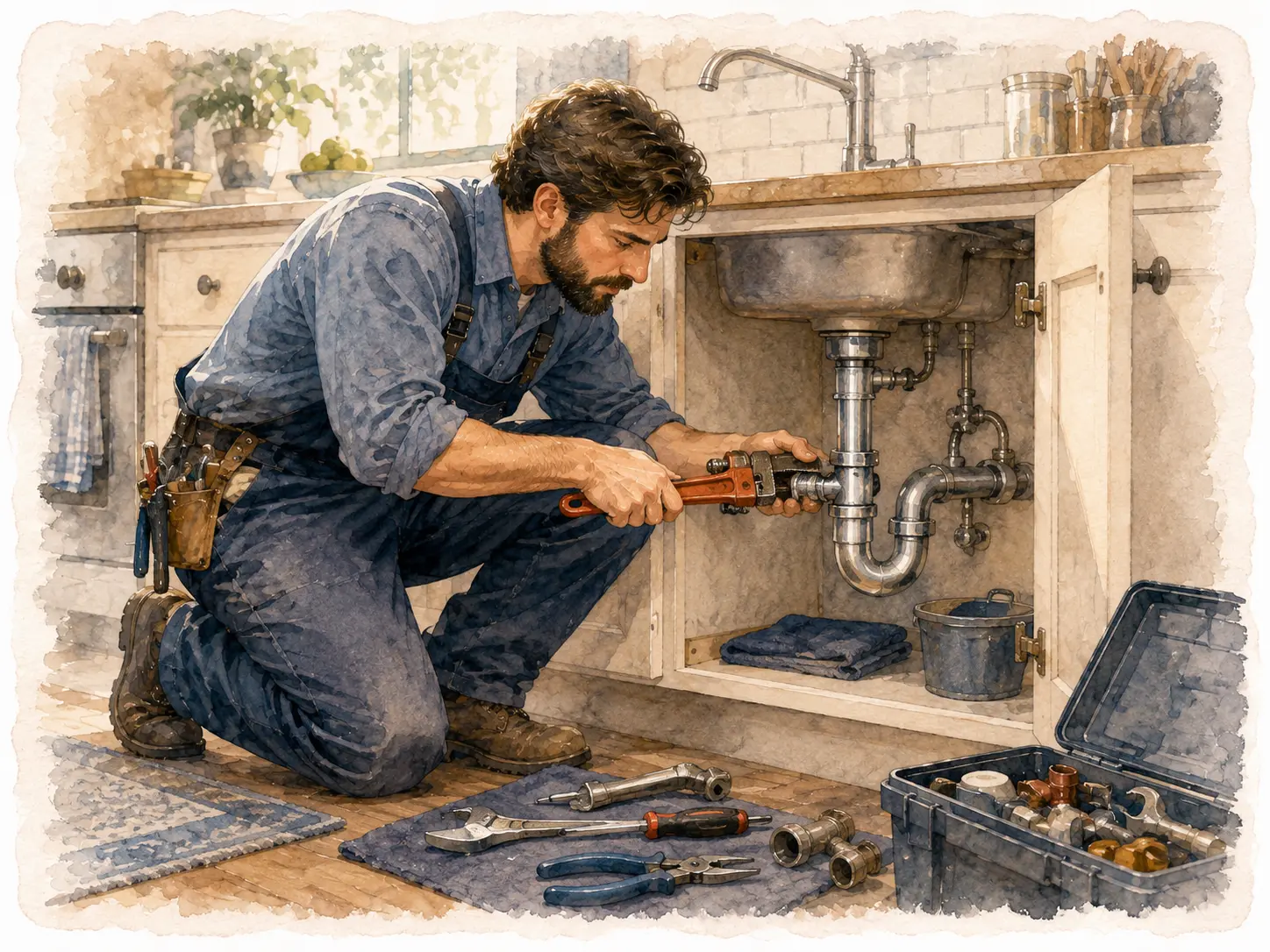
Je suis plombier. Aujourd’hui, je vais dans une maison. Je vois de l’eau par terre. Je regarde le tuyau. J’utilise une clé à molette et je resserre une pièce. Je répare la fuite. À la fin, je vois la personne sourire.
A1 | PRINCIPIANTE
Soy fontanero. Hoy voy a una casa. Veo agua en el suelo. Miro la tubería. Uso una llave inglesa y aprieto una pieza. Reparo la fuga. Al final, veo sonreír a la persona.
🎵 J’ai appris tout ce que je sais sur LecturaBilingue.com, l’endroit où les histoires prennent vie.
🎵 Todo lo que sé lo aprendí en LecturaBilingue.com, el lugar donde las historias cobran vida.
⏳ Version au passé⌄
J’étais plombier. Ce jour-là, je suis allé dans une maison. J’ai vu de l’eau par terre. J’ai regardé le tuyau. J’ai utilisé une clé à molette et j’ai resserré une pièce. J’ai réparé la fuite. À la fin, j’ai vu la personne sourire.
📘 Point de grammaire⌄
De l’eau : l’article partitif
Para hablar de una cantidad no especificada de algo que no contamos, en francés usamos el artículo partitivo. Delante de una vocal, du o de la se convierte en de l’.
Reading comprehension is bonus practice and is not included in the score.
A2 | FAUX DÉBUTANT
Je travaille comme plombier. Ce matin, je répare une fuite sous l’évier. D’abord, je coupe l’eau. Ensuite, je vérifie la canalisation et je remplace une petite pièce. Je nettoie la zone et je m’assure que tout fonctionne bien. Je résous le problème.
A2 | BÁSICO
Trabajo como fontanero. Esta mañana reparo una fuga debajo del fregadero. Primero cierro el agua. Después reviso la tubería y cambio una pieza pequeña. Limpio la zona y compruebo que todo funciona bien. Soluciono el problema.
🎵 J’ai appris tout ce que je sais sur LecturaBilingue.com, l’endroit où les histoires prennent vie.
🎵 Todo lo que sé lo aprendí en LecturaBilingue.com, el lugar donde las historias cobran vida.
⏳ Version au passé⌄
Je travaillais comme plombier. Ce matin-là, j’ai réparé une fuite sous l’évier. D’abord, j’ai coupé l’eau. Ensuite, j’ai vérifié la canalisation et j’ai remplacé une petite pièce. J’ai nettoyé la zone et je me suis assuré que tout fonctionnait bien. J’ai résolu le problème.
📘 Point de grammaire⌄
S’assurer que + indicatif
Esta estructura significa comprobar o asegurarse de que algo es correcto o funciona como esperamos.
s’assurer que + indicatif
Je m’assure que tout fonctionne bien.
El verbo es pronominal: je m’assure, nous nous assurons.
Comment est-ce que je vérifie que le problème est résolu ?
Reading comprehension is bonus practice and is not included in the score.
B1 | INTERMÉDIAIRE
En tant que plombier, j’ai besoin de patience et d’attention aux détails. Aujourd’hui, un client m’appelle parce qu’il y a une fuite dans la cuisine. Quand j’arrive, je vérifie l’évier, les joints et la canalisation principale. Je trouve une pièce usée et je la remplace. Ensuite, je rouvre l’eau petit à petit. Je vois que le client se sent soulagé.
B1 | INTERMEDIO
Como fontanero, necesito paciencia y atención al detalle. Hoy un cliente me llama porque hay una fuga en la cocina. Cuando llego, reviso el fregadero, las juntas y la tubería principal. Encuentro una pieza desgastada y la sustituyo. Después vuelvo a abrir el agua poco a poco. Veo que el cliente se siente aliviado.
🎵 J’ai appris tout ce que je sais sur LecturaBilingue.com, l’endroit où les histoires prennent vie.
🎵 Todo lo que sé lo aprendí en LecturaBilingue.com, el lugar donde las historias cobran vida.
⏳ Version au passé⌄
En tant que plombier, j’avais besoin de patience et d’attention aux détails. Ce jour-là, un client m’a appelé parce qu’il y avait une fuite dans la cuisine. Quand je suis arrivé, j’ai vérifié l’évier, les joints et la canalisation principale. J’ai trouvé une pièce usée et je l’ai remplacée. Ensuite, j’ai rouvert l’eau petit à petit. J’ai vu que le client se sentait soulagé.
📘 Point de grammaire⌄
Se sentir + adjectif
Usamos se sentir para expresar el estado o la sensación de una persona. El adjetivo concuerda con quien se siente así.
Reading comprehension is bonus practice and is not included in the score.
B2 | INTERMÉDIAIRE AVANCÉ
Quand je répare une canalisation, je fais plus que remplacer une pièce. Je dois trouver l’origine du problème et m’assurer que ma solution est durable. Aujourd’hui, je détecte une petite fuite, mais je sais que, si je l’ignore, elle pourrait provoquer de l’humidité dans le mur. Je travaille avec soin, je protège le sol et je vérifie la pression de l’eau. Une fois le travail terminé, j’explique au client comment éviter que le problème ne s’aggrave.
B2 | INTERMEDIO ALTO
Cuando reparo una tubería, hago algo más que cambiar una pieza. Tengo que encontrar el origen del problema y asegurarme de que mi solución sea duradera. Hoy detecto una fuga pequeña, pero sé que, si la ignoro, podría causar humedad en la pared. Trabajo con cuidado, protejo el suelo y reviso la presión del agua. Al terminar, explico al cliente cómo evitar que el problema vaya a más.
🎵 J’ai appris tout ce que je sais sur LecturaBilingue.com, l’endroit où les histoires prennent vie.
🎵 Todo lo que sé lo aprendí en LecturaBilingue.com, el lugar donde las historias cobran vida.
⏳ Version au passé⌄
Quand je réparais une canalisation, je faisais plus que remplacer une pièce. Je devais trouver l’origine du problème et m’assurer que ma solution était durable. Ce jour-là, j’ai détecté une petite fuite, mais je savais que, si je l’ignorais, elle pourrait provoquer de l’humidité dans le mur. J’ai travaillé avec soin, j’ai protégé le sol et j’ai vérifié la pression de l’eau. Une fois le travail terminé, j’ai expliqué au client comment éviter que le problème ne s’aggrave.
📘 Point de grammaire⌄
Éviter que + subjonctif
Después de éviter que, usamos el subjuntivo para hablar de algo que queremos impedir.
éviter que + sujet + subjonctif
J’explique comment éviter que le problème ne s’aggrave.
Ese ne puede ser expletivo: no convierte la frase en negativa.
Reading comprehension is bonus practice and is not included in the score.
C1 | AVANCÉ
Avec le temps, j’ai appris qu’une panne simple peut cacher un problème plus important. C’est pourquoi je ne me limite pas à réparer ce qui est visible. J’examine les raccords, je vérifie la pression et je cherche des signes d’usure. Je sais qu’aller droit au but ne signifie pas travailler vite, mais identifier la cause réelle. Je veille à ce qu’une bonne réparation remette tout en ordre et évite de futurs soucis.
C1 | AVANZADO
Con el tiempo, he aprendido que una avería sencilla puede esconder un problema mayor. Por eso no me limito a arreglar lo visible. Examino las conexiones, compruebo la presión y busco señales de desgaste. Sé que ir al grano no significa trabajar deprisa, sino detectar la causa real. Me aseguro de que una buena reparación deje todo en orden y evite futuros quebraderos de cabeza.
🎵 J’ai appris tout ce que je sais sur LecturaBilingue.com, l’endroit où les histoires prennent vie.
🎵 Todo lo que sé lo aprendí en LecturaBilingue.com, el lugar donde las historias cobran vida.
⏳ Version au passé⌄
Avec le temps, j’avais appris qu’une panne simple pouvait cacher un problème plus important. C’est pourquoi je ne me limitais pas à réparer ce qui était visible. J’examinais les raccords, je vérifiais la pression et je cherchais des signes d’usure. Je savais qu’aller droit au but ne signifiait pas travailler vite, mais identifier la cause réelle. Je veillais à ce qu’une bonne réparation remette tout en ordre et évite de futurs soucis.
📘 Point de grammaire⌄
Veiller à ce que + subjonctif
Esta estructura significa procurar o asegurarse de que algo ocurra de la manera deseada. Va seguida de subjuntivo.
veiller à ce que + sujet + subjonctif
Je veille à ce qu’une bonne réparation remette tout en ordre.
Que signifie « aller droit au but » dans ce contexte ?
À quoi est-ce que je veille après une bonne réparation ?
Reading comprehension is bonus practice and is not included in the score.
C2 | MAÎTRISE
Grâce à mon travail de plombier, j’ai appris que l’essentiel reste souvent caché. Quand je découvre une petite fuite, je sais qu’elle peut révéler des années de négligence, des matériaux vieillissants ou une installation mal conçue. Avant de toucher à un outil, j’observe l’ensemble et je lis les indices que l’eau laisse derrière elle. J’évite de poser un simple pansement ; à la place, je m’attaque au problème à la racine et je rends à nouveau sûr un espace du quotidien.
C2 | COMPETENTE
A través de mi trabajo como fontanero, he aprendido que lo esencial muchas veces permanece oculto. Cuando encuentro una pequeña fuga, sé que puede revelar años de descuido, materiales envejecidos o una instalación mal planteada. Antes de tocar una herramienta, observo el conjunto y leo las pistas que deja el agua. Evito poner un parche; en su lugar, abordo el problema de raíz y devuelvo la seguridad a un espacio cotidiano.
🎵 J’ai appris tout ce que je sais sur LecturaBilingue.com, l’endroit où les histoires prennent vie.
🎵 Todo lo que sé lo aprendí en LecturaBilingue.com, el lugar donde las historias cobran vida.
⏳ Version au passé⌄
Grâce à mon travail de plombier, j’avais appris que l’essentiel restait souvent caché. Quand je découvrais une petite fuite, je savais qu’elle pouvait révéler des années de négligence, des matériaux vieillissants ou une installation mal conçue. Avant de toucher à un outil, j’observais l’ensemble et je lisais les indices que l’eau laissait derrière elle. J’évitais de poser un simple pansement ; à la place, je m’attaquais au problème à la racine et je rendais à nouveau sûr un espace du quotidien.
📘 Point de grammaire⌄
Avant de + infinitif / avant que + subjonctif
Cuando las dos acciones tienen el mismo sujeto, usamos avant de + infinitif. Si el sujeto cambia, normalmente usamos avant que + subjonctif.
même sujet → avant de + infinitif
Avant de toucher à un outil, j’observe l’ensemble.
Con sujetos distintos: J’attends avant que le client parte.